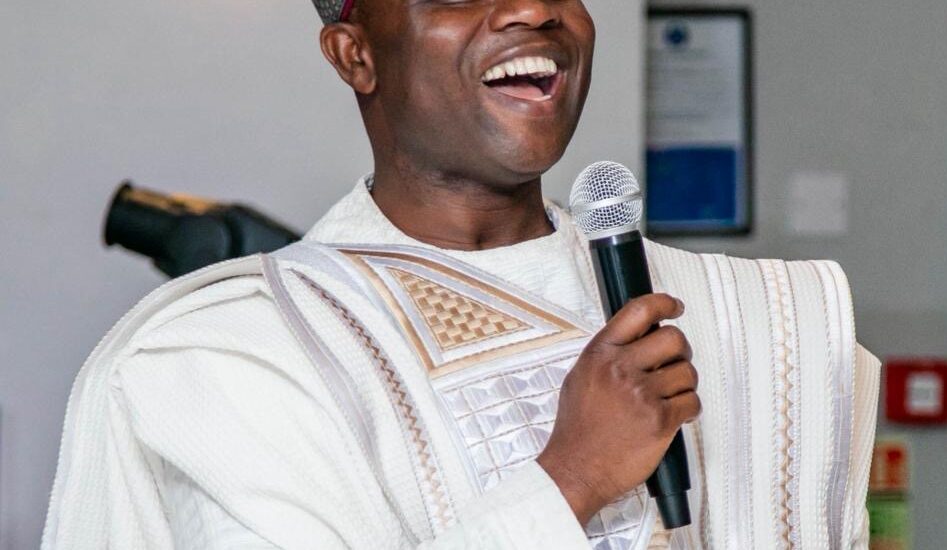
When I sat down for my interview on the 29th of March 2026, I knew that I was stepping into a conversation that would require us all to look at our history with honesty and our present with urgency. As Chairman of the NDC UK and Ireland Chapter, I carry the voices of our Ghanaian diaspora community, and it is my duty to ensure that the lessons of centuries past are not forgotten but are instead used to fuel the fight for justice today. What I laid out in that interview was a clear and deliberate connection between the historical horrors of the Transatlantic Slave Trade and the quiet, pervasive crisis of modern slavery that continues to devastate lives across the globe. And at the heart of my message was a profound recognition of the leadership President John Dramani Mahama has demonstrated in taking this fight to the United Nations.
To understand why President Mahama’s work matters so deeply, we must first return to the origins of the inhumanity that shaped our modern world. The Transatlantic Slave Trade began in the mid-15th century, initiated by Portuguese merchants who ventured down the West African coast. What started as small-scale raids soon evolved into a vast, systematic enterprise. By the early 1500s, following the Spanish settlement of the Caribbean, the first enslaved Africans were being transported directly to the Americas. The year 1518 marked a turning point, with direct shipping routes established from Africa to the New World, driven by an unquenchable thirst for labour in sugarcane fields and mining operations. This was the birth of a brutal machinery that would, over the next four centuries, traffic more than twelve million African people across the Atlantic.
The system that emerged was known as the triangular trade, and every leg of this journey was soaked in suffering. European ships carried manufactured goods such as guns, textiles, and brandy to West Africa, exchanging these items for human beings. The capture of these individuals was made possible by the exploitation of existing conflicts, with European firearms fueling wars that destabilized entire kingdoms. The second leg of the journey, the Middle Passage, remains one of the most horrific chapters in human history. Enslaved Africans were crammed into the holds of ships for six to eight weeks under conditions so appalling that disease, starvation, and despair claimed the lives of an estimated ten to fifteen percent of all those forced aboard. They arrived in the Americas not as people, but as chattel legal property stripped of names, families, and humanity. The third leg saw ships return to Europe laden with sugar, tobacco, and cotton, products cultivated by unpaid labour that generated immense wealth for European powers and laid the foundation for global economic inequality that persists to this day.
The impact on Africa was catastrophic. West and Central Africa suffered profound social destabilization, with entire communities robbed of their able bodied populations. Families were torn apart, political structures were weakened, and a legacy of trauma was etched into the fabric of our societies. This was not a footnote in history; it was the systematic dismantling of human dignity on a scale that the world had never witnessed before. And while the legal abolition of the trade in the 19th century brought an end to that form of bondage, the spirit of exploitation never truly disappeared. It simply adapted.
This brings me to the second part of my message, the link that too few are willing to make openly. Modern slavery is the direct descendant of that ancient evil. Today, an estimated fifty million people worldwide are living in conditions of forced exploitation, their freedom stolen through coercion, threats, and deception. The forms it takes are numerous, yet each one echoes the mechanics of the past. We see forced labour in industries like agriculture, construction, and manufacturing, where workers have their wages withheld and their passports confiscated, trapped in situations they cannot leave. We see debt bondage, the most widespread form of modern slavery, where individuals are forced to work endlessly to pay off a debt that is manipulated to ensure they never achieve freedom. We see human trafficking, the recruitment and transportation of people through force or fraud across borders or within countries, feeding a criminal enterprise that preys on the vulnerable.
We see sexual exploitation, where victims are forced into prostitution and pornography through violence, threats, and drug dependency. We see domestic servitude, where individuals, often women and girls, are isolated in private households, working for nothing, unable to seek help. We see forced and early marriage, where children are married against their will and denied any means of escape. We see criminal exploitation, where vulnerable individuals are coerced into transporting drugs or committing crimes. We see descent-based slavery, where people are born into bondage because their ancestors were enslaved. And we see the grotesque practice of organ harvesting, where victims are trafficked so their organs can be sold on the black market. Children account for roughly a quarter of all victims, their innocence stolen by the same forces of greed and dehumanization that drove the slave ships centuries ago.
The thread that connects these two eras is exploitation rooted in the belief that some lives are worth less than others. The victims of modern slavery are often migrants, the poor, and those with uncertain legal status. They are targeted precisely because society has made them invisible. They cannot truly consent to their situations because they are controlled by forces that strip them of autonomy. They are the modern inheritors of the same suffering that our ancestors endured on the dungeons of Elmina and Cape Coast.
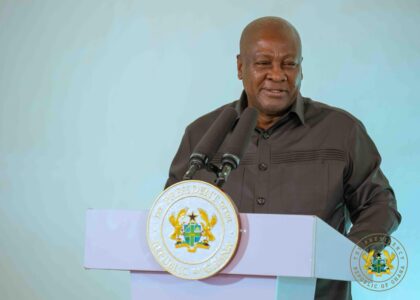
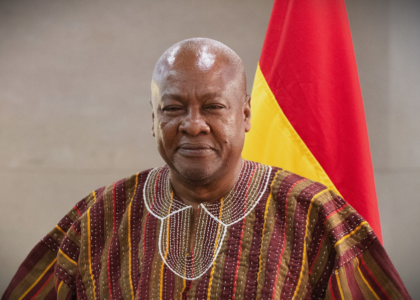
It is against this dark backdrop that I wish to offer a message of hope and congratulations. President John Dramani Mahama has taken up this cause with the kind of moral clarity that our world desperately needs. His course at the United Nations is not merely a diplomatic initiative; it is a reckoning. President Mahama understands that the economic disparities between the Global North and the Global South are not accidental. They are the direct consequences of centuries of extraction that began with the slave trade and continue today through exploitative economic structures that make vulnerable populations easy prey for traffickers and exploiters.
When President Mahama stands before the United Nations, he does so with the weight of our history upon his shoulders. He speaks for the millions who did not survive the Middle Passage. He speaks for the families torn apart on the auction blocks of Charleston and Kingston. And he speaks for the fifty million people today who live in the shadows, trapped in forms of bondage that too many have chosen to ignore. His advocacy for reparative justice, for stronger international frameworks to combat trafficking, and for economic investments that address the root causes of vulnerability is exactly the kind of leadership that the global community needs.
I therefore extend my heartfelt congratulations to President Mahama for a good fight well fought. He has shown that Ghana, a nation that knows the sting of the slave trade better than most, is willing to lead the charge for its eradication in all its forms. He has demonstrated that leadership is not about comfortable conversations but about confronting hard truths. And he has proven that the descendants of those who were enslaved are now standing on the world stage demanding accountability from those who benefited from that brutal system.
As the NDC UK and Ireland Chapter, our role is to stand firmly behind this vision. We call on the United Kingdom, Ireland, and all European nations that profited from the triangular trade to join President Mahama in this fight. We call for stronger cross-border cooperation to dismantle trafficking networks. We call for greater protections for migrant workers who are so often exploited. We call for investments in education and economic opportunity in West Africa that address the vulnerabilities that traffickers exploit. And we call for a genuine commitment to reparative justice, not as charity, but as the belated acknowledgment of centuries of stolen labour and stolen lives.
The chains of the past have not been completely broken. They have been reforged in new forms, hidden in supply chains, locked behind the doors of private homes, and buried in the fine print of exploitative contracts. But with leaders like President Mahama carrying the torch, with a diaspora that refuses to forget, and with a global community that is finally willing to listen, we can shatter these chains once and for all. The fight against modern slavery is the fight of our time, and I am proud to say that Ghana, under the leadership of President Mahama, is leading the way. Let us all join him in this sacred work.
By Philip Attuah Ansah