By Ayure-inga Mark Agana
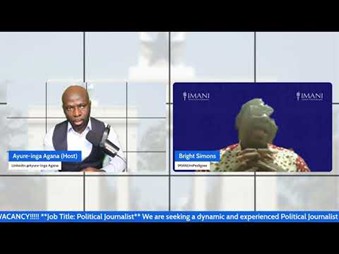
In a riveting episode of The Assembly Podcast (http://www.youtube.com/@The_Assembly_Africa), Ghanaian innovator and policy analyst Bright Simons sparked a paradigm-shifting debate on Africa’s governance crisis, challenging long-standing academic frameworks while proposing a bold new lens to diagnose systemic dysfunction. At the heart of the discussion was Simons’ critique of Peter P. Ekeh’s seminal “Two Publics” theory and his introduction of “Katanomy”—a concept that reframes Africa’s governance woes as a crisis of fragmentation, not just colonial hangovers.
Colonial Legacies Revisited: Ekeh’s “Two Publics” Theory
The conversation, hosted by Dr. Ayure-Inga Mark Agana, began by revisiting Nigerian scholar Peter Ekeh’s influential 1975 thesis, Colonialism and the Two Publics in Africa. Ekeh posited that colonialism fractured African societies into two moral spheres: the primordial public (rooted in ethnic or communal ties) and the civic public (state institutions viewed as alien impositions). This duality, Ekeh argued, bred corruption, as citizens felt morally justified in plundering state resources to serve communal interests.
For decades, Ekeh’s theory has dominated analyses of Africa’s governance challenges, framing corruption as a clash between loyalty to community and loyalty to the state. Yet Simons, while acknowledging Ekeh’s foundational work, argued that this framework fails to capture the complexity of modern governance failures.
Beyond Moral Dualism: Simons’ “Katanomy” and the Fractured State
Coining the term Katanomy—from the Greek kata (fragmented) and nomos (governance)—Simons painted a stark portrait of postcolonial African states where power thrives in chaos. “The crisis today isn’t just about moral dualism,” Simons asserted. “It’s about systems where politics and policy operate in parallel universes, and governance is reduced to a game of navigating disconnected centers of influence.”
In a katanomic system, Simons explained, laws exist on paper but enforcement is arbitrary. Policies become “procurement tools” for political theater, cronyism, and patronage rather than instruments of development. Success is measured not by tangible outcomes but by a leader’s ability to spin narratives or distribute spoils. Ghana’s recent struggles with contractual obligations exemplified this: despite parliamentary ratification of agreements, the state routinely ignores terms, treating legal processes as mere “rituals.”
Politics Without Policy: The Theater of Governance
Central to Simons’ thesis is the decoupling of politics from policy. Unlike democracies where political fortunes hinge on specific policy results, African governance, he argued, thrives on ambiguity. “Only aggregate effects matter—like slight GDP bumps or token infrastructure projects—not whether individual policies actually work,” Simons noted. This “state enchantment” allows leaders to mask dysfunction through spectacle, avoiding accountability for failed initiatives.
He cited Ghana’s controversial Pwalugu Multipurpose Dam project as a case study. Designed to boost irrigation and energy production, the project has instead become a symbol of systemic decay. Rather than recovering 12 million in misused funds through Ghana’s anti−corruption Operation Recover All Loot (ORAL), the state now faces an additional 12 million liability. The contractor has abandoned the site, leaving feeder roads in disrepair and communities disillusioned.
“Dysfunctional policy design led to Ghana spending nearly 100 million on planning with no progress. Dysfunctional legal behavior has saddled us with 24 million in liabilities without tangible benefits,” Simons lamented.
Ekeh vs. Simons: A Clash of Generational Perspectives
While Ekeh’s theory attributes corruption to a moral conflict between community and state, Simons shifts focus to institutional decay. He argued that even nations like Tanzania—which suppressed ethnic divisions under Julius Nyerere’s Ujamaa socialism—now grapple with governance systems where power consolidates through fragmentation.
“Ekeh’s work was vital for understanding postcolonial transitions, but Africa’s governance crisis has evolved,” Simons said. “Today, it’s less about ‘who’ you’re loyal to and more about ‘how’ you game a broken system.”
Implications for Reform: Can Africa Mend the Fractures?
The discussion concluded with urgent questions about reform. Simons emphasized the need for accountability mechanisms that tether political survival to policy results, stronger civil society, and independent media to disrupt the “theater” of governance. However, he warned that “katanomists”—actors skilled in exploiting fragmented systems—would resist reforms threatening their dominance.
“Until citizens demand consequences for individual policy failures, not just broad electoral promises, the theater will continue,” Simons asserted.
For initiatives like ORAL, the implications are stark: targeting individual politicians may miss the mark in systems where failure is baked into convoluted policymaking processes. Instead, systemic overhauls—prioritizing institutional coherence and accountability—are critical.
Conclusion: A New Lens for an Old Crisis
Bright Simons’ Katanomy offers a provocative reframing of Africa’s governance challenges, moving beyond colonial blame games to confront homegrown systemic failures. As debates over corruption and state legitimacy rage, his critique underscores a pressing truth: Africa’s path to renewal requires not just recovering looted funds but rebuilding governance itself.
The Assembly Podcast episode is available at http://www.youtube.com/@The_Assembly_Africa